

Introduction
Every great children’s learning experience has a guide. Not a teacher, not a parent — a character. Elmo. Pikachu. Bluey. Kodi from Khan Academy Kids. What do they all have in common? None of them are human.
That’s not a coincidence. It’s not even just a creative choice. It’s a design decision backed by developmental psychology, engagement research, and decades of evidence from the most beloved children’s media ever made.
As game designers, educators, and parents, understanding the why behind using fantastical characters in learning experiences isn’t just academically interesting — it unlocks incredible potential for engagement, motivation, and effective learning. In this article, we’ll unpack why non-human characters work so well, and how to design them effectively. Let’s dive into it.

Bert And Ernie from Sesame street
The Magic of Make-Believe: Why Kids Prefer Non-Humans
It might seem logical that children relate best to characters who look like them. But children, especially young ones, consistently gravitate toward non-human guides because it aligns perfectly with their cognitive and emotional needs.
1. Cognitive Alignment: Young children naturally believe toys and animals have feelings—a stage Jean Piaget called animism. That’s why a child might scold a doll or comfort a teddy bear. By giving life to imaginary beings, kids make sense of their world. Non-human characters tap directly into this mindset, making them instantly relatable and “real.”
2. Fueling Exploration: Fantasy characters spark imagination and wonder. That sense of “what if” drives exploration and intrinsic motivation—two key ingredients in playful learning. Games like Animal Crossing and Sago Mini show how gentle fantasy worlds sustain attention far longer than realistic ones.
3. Preference Data: In a study on preschooler game design (Endah Sudarmilah, 2018), 91% of children preferred non-human characters as their game guides. Rounded shapes, bright colors, and clear emotions felt safer and more fun than realistic human faces.

Children’s Preference Tendency Towards Game Character Shape (credit: Endah Sudarmilah)
More Than Just Fun: Developmental and Social Benefits
Non-human characters do more than entertain—they support emotional and social growth.
Reduced Inhibition & Trust: Kids often open up more easily to a puppet or animated guide than to an adult. The character feels like a peer, not an authority figure — carrying none of the judgment or pressure children associate with grown-ups. This safety is also what enables the formation of a strong Parasocial Relationship — the one-sided emotional bond where children come to see a character as a genuine friend. And according to Richards & Calvert (2016), that friendship is far from trivial: it directly boosts trust and learning retention.
Supporting Social Understanding: Simpler, exaggerated expressions from non-human characters help children practice empathy and social reasoning (Theory of Mind). Shows like Bluey or Daniel Tiger’s Neighborhood use this technique beautifully—each episode models emotions clearly through animal characters.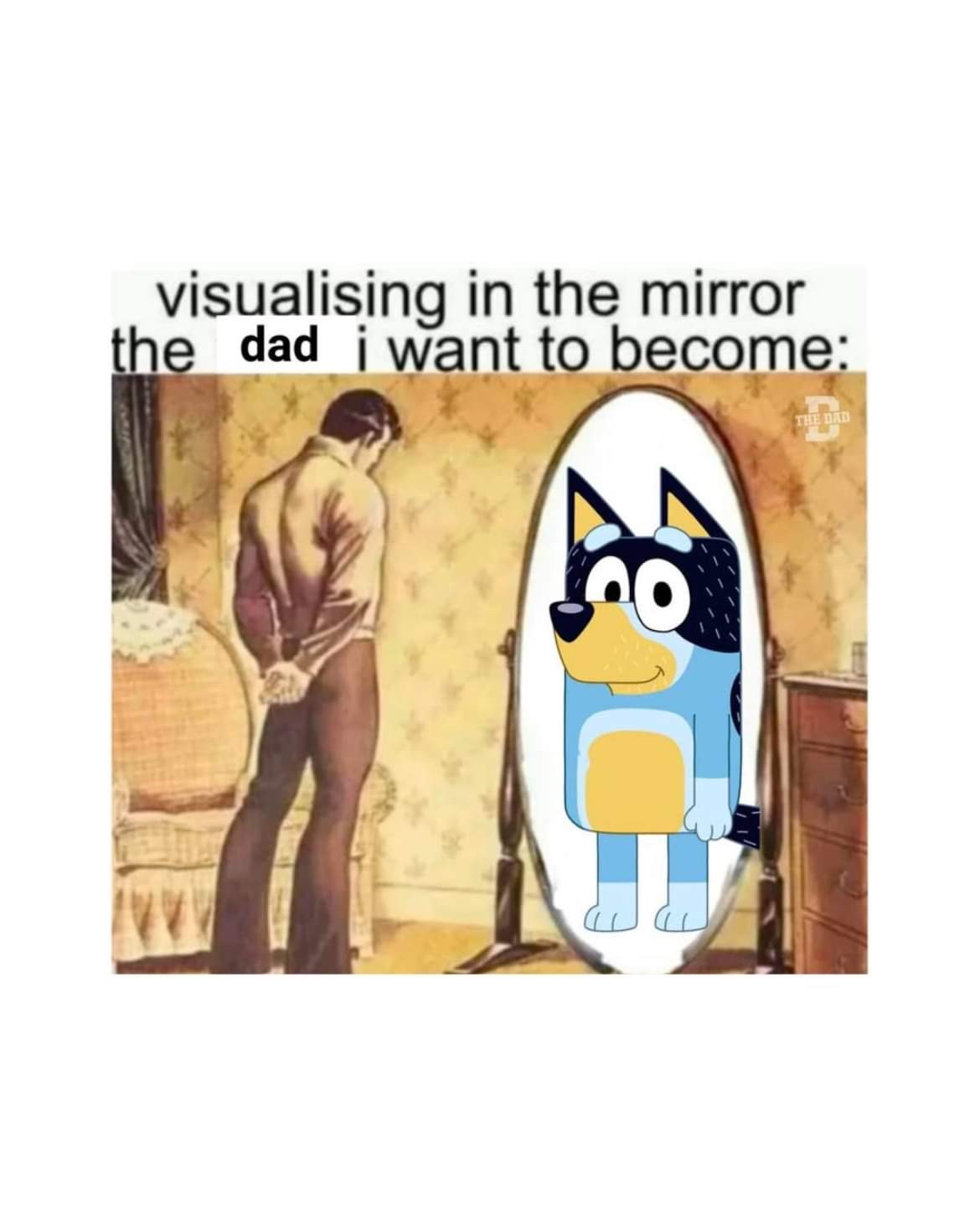
Bluey’s impact isn’t limited to children. When parents start aspiring to be Bandit, you know a non-human character has achieved something remarkable in behavioral modeling.
Design Guidelines
A powerful character is only as effective as its implementation.
Visual Design
- Use clean lines, bright palettes, and exaggerated features — oversized eyes, expressive mouths — to signal safety and warmth instantly
- Avoid complex, gritty, or overly realistic textures; approachability always wins over realism
- Match character complexity to your audience’s age: a wobbly, round cartoon animal suits a three-year-old, while a slightly more detailed, emotionally layered design better serves a seven-year-old navigating more nuanced social situations
Voice & Tone
- The character’s voice must feel warm and peer-like — never condescending, never clinical
- Always model a growth mindset: “You traced that so carefully — let’s try once more” lands very differently than “That’s wrong, try again”
- Praise effort consistently, not just correct answers.
Role Flexibility
- Don’t let your character exist only as an instructor — that files them alongside authority figures in a child’s mind
- Build in moments of unscripted play: a hide-and-seek game, a dress-up interaction, anything with no learning agenda
- That play time isn’t a distraction from learning — it deepens the emotional bond that makes the learning stick
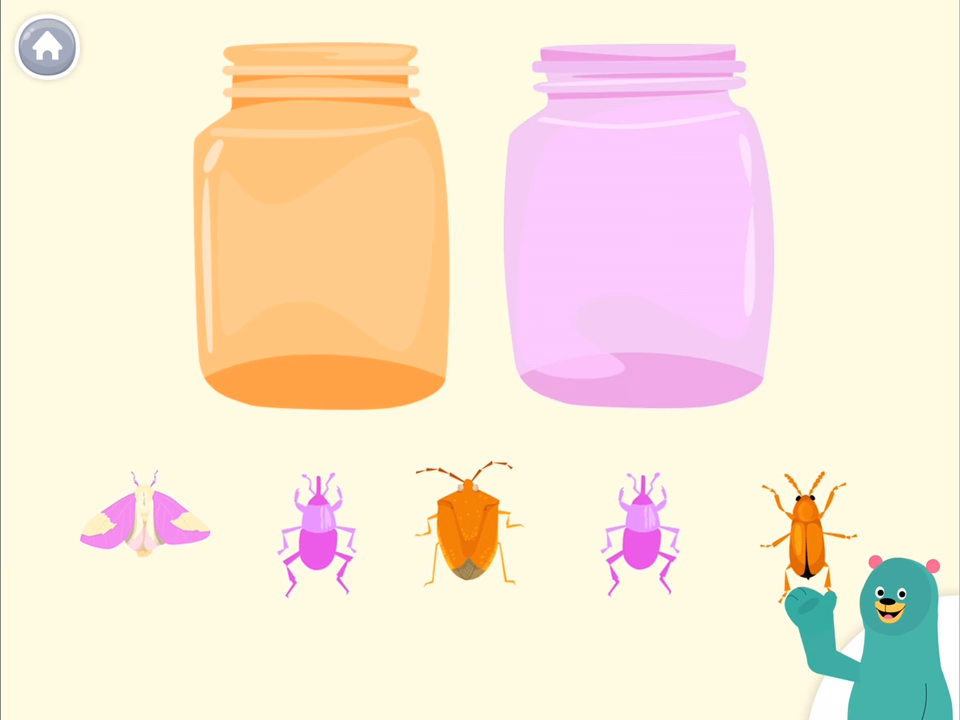
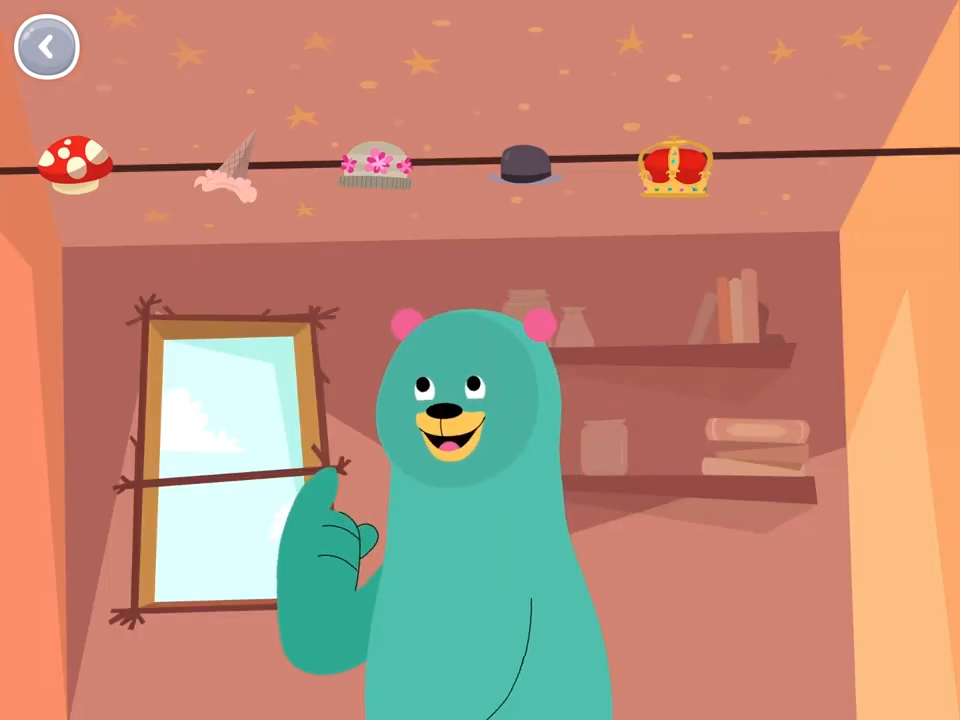
Kodi from Khan Academy Kids (Top example: Guide, Bottom example: Hat Dress-up mini game)
Multiple Characters & Culture
A single guide is a missed opportunity for depth:
- Ensemble Cast for Diversity and SEL: Using an ensemble of multiple characters (like the Khan Academy Kids cast of animals from different continents) ensures diverse children find a character they can identify with. This is key for Cultural Representation.
- Modeling Conflict: Multiple characters allow the app to model realistic social situations (like two characters arguing or needing to share), which is crucial for teaching social and moral lessons more dynamically.
- Specialization: Different characters can “specialize” in different subjects (a monkey for math, a fox for literacy), ensuring the right persona delivers the most relevant content.
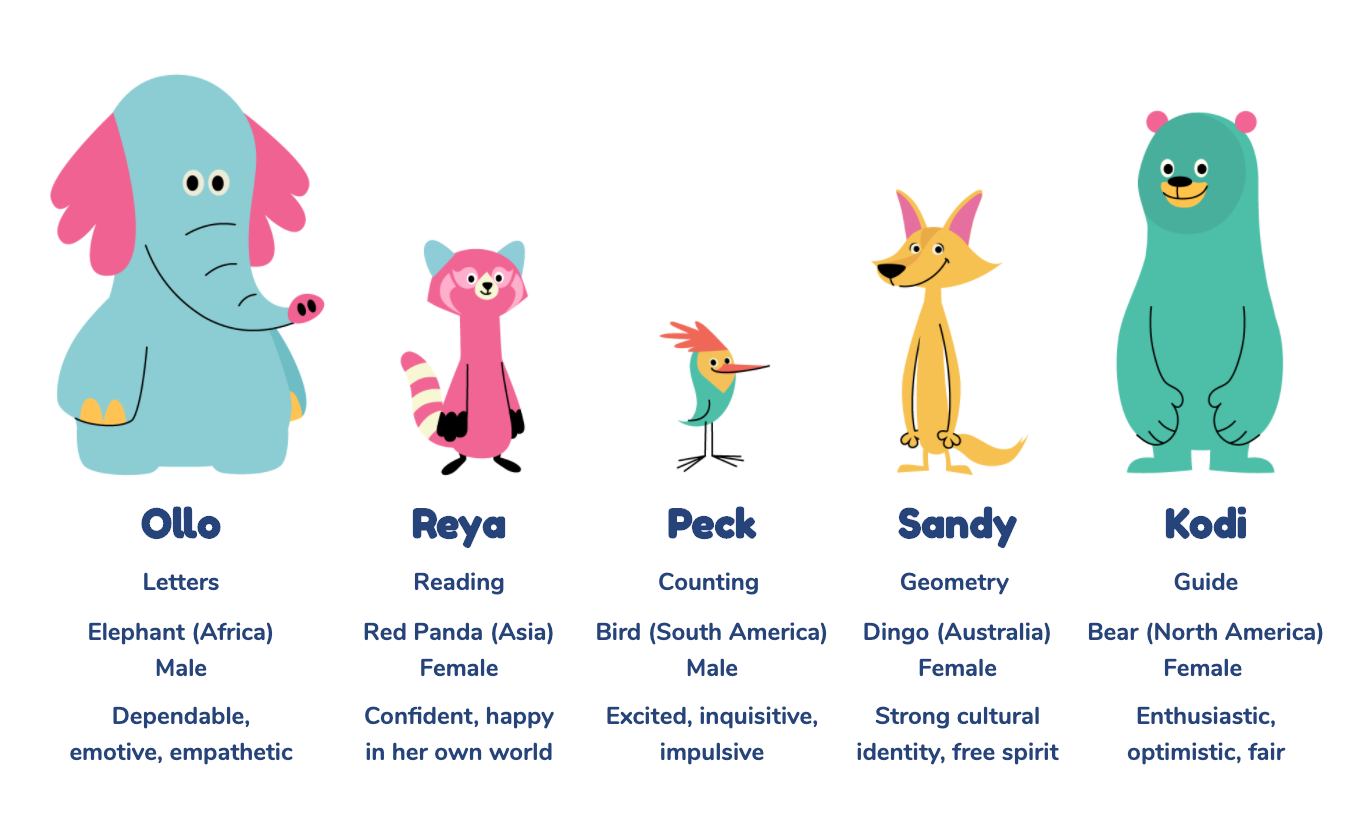
Characters from (Khan Academy Kids)
Trade-Offs and the Strategic Use of Human Characters
Fantastical characters are powerful, but they have limitations that designers must plan for:
- The Moral Transfer Problem: While animals excel at academic and imaginative guidance, research suggests that children may be less likely to apply social and moral lessons (like sharing or telling the truth) learned from an animal to their own real-world human behavior.
- The Solution: The best design often uses a hybrid approach. Utilize non-human, imaginary characters as the primary guides for abstract academic tasks, but introduce human or human-like characters specifically in stories or segments focused on explicitly human social and moral dilemmas. This approach was used in my childhood show, the Arabic sesame street. And I still remember the advice from the human characters such as Miss Nabela and Khala Khairia.
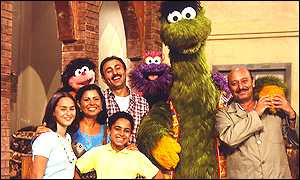
Sesame Street Arabic Version crew (2000s)
Final Design Tip
Resist the pull toward realism. The more human your character looks without fully being human, the more unsettling it becomes. Elmo works. A hyper-realistic CGI child does not. When in doubt, lean further into fantasy, not closer to reality.
Closing,
Choosing non-human characters for educational games isn’t about shying away from reality. It’s about strategically embracing the power of imagination and play to create a more effective, joyful, and memorable learning experience. By understanding the unique cognitive and emotional pathways these fantastical friends unlock, we can design games that don’t just teach, but truly inspire a lifelong love of learning.
References:
- Richards, M. N., & Calvert, S. L. (2016). Parasocial relationships and children’s learning.
- Sudarmilah, E. (2018). Developing a game for preschoolers: What character, emotion and reward will tend to hack preschoolers?